
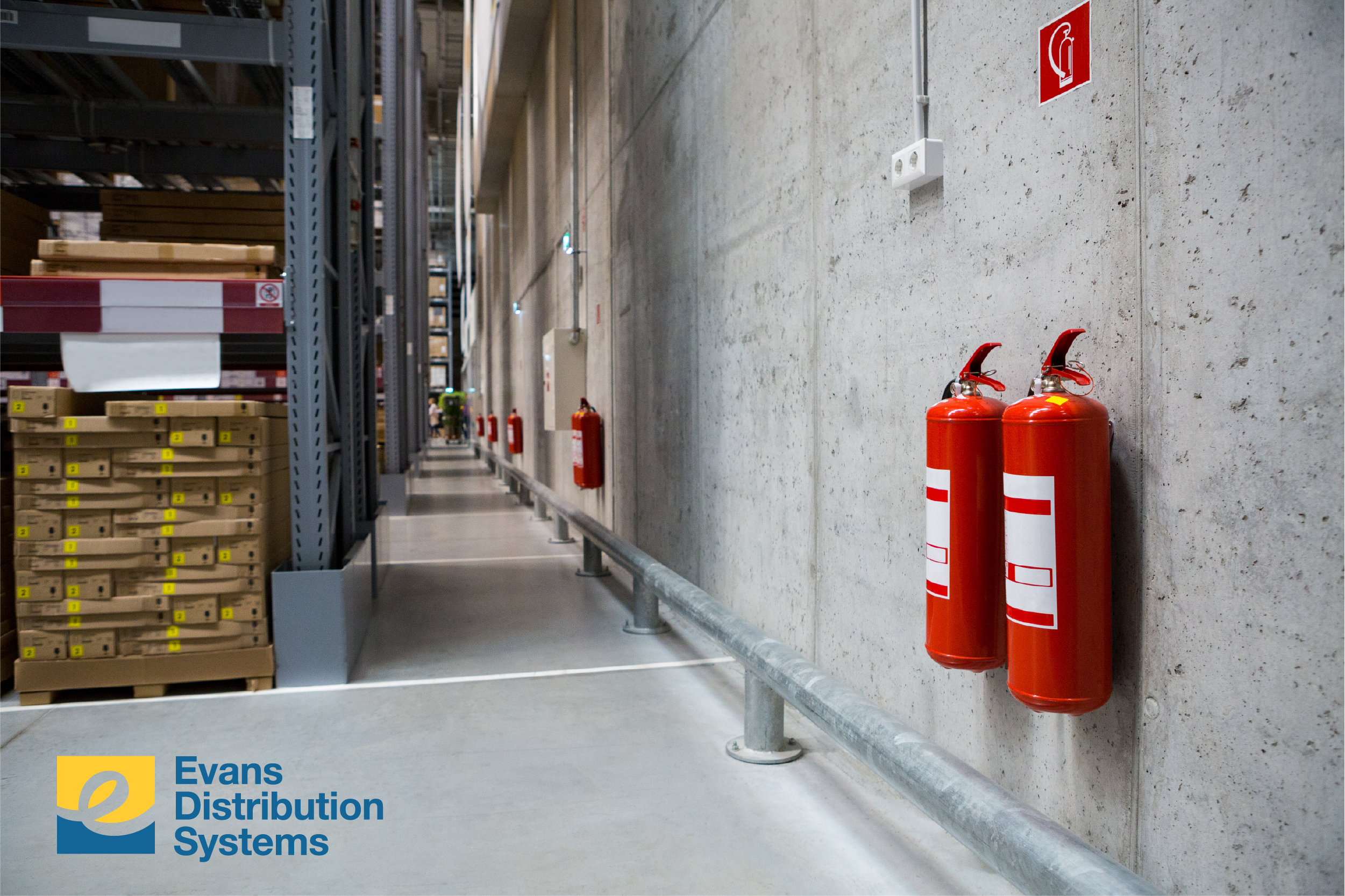
When the weather outside is frightful, warehouses must take action to ensure their facilities are delightful, especially during the winter season. According to the National Fire Protection Association (NFPA), “From 2018 to 2022, there was an estimated 1,508 warehouse fires annually.” The report identified operating equipment as the leading source of warehouse fires (44%). There are many seasonal challenges during the winter months, but arguably, the most important is the risk of a fire. Therefore, it is imperative to have an efficient fire prevention plan in place. Here are a few elements to fire prevention.
Dry Winters Fuel Fires
Vapor pressure decreases as temperatures drop. If a fire were to ignite, low humidity atmosphere creates a catalyst for flammability. Warehouses are ripe for fires because of the use of cardboard, wood-based pallets, and other paper-based packaging materials. Depending on the warehouse, stacking and racking systems can further fire damage.
Maintenance of Equipment
Due to their size, a majority of warehouses are not heated in the same way a house is heated. Most likely, certain areas or zones within a warehouse may have heating or mobile heating equipment to increase comfortability in office areas and breakrooms. Temporary heating units in any environment can expose facilities to a large-scale industrial fire if not properly monitored and maintained.
Frozen Pipes
If water is not regularly run, pipes are at risk for freezing and bursting. Most fire suppression systems require some amount of water to function. Even partial freezing can delay a suppression system. All pipes should be regularly run and insulated throughout the warehouse.
Fires Suppression Systems
There are several different types of fire suppression systems. The type of products, size, or layout of a facility determines what system is needed. The first step is to identify the commodity classification based on the product and its packaging. Wood, plastics, rubbers, chemicals all have unique requirements and flammability levels. Warehouse environments require sprinkler systems on the ceilings and on racking systems as well.
Early suppression fast response (ESFR) is one of the most effective sprinklers because their sensors react quickly to suspicious conditions and have a high velocity water discharge. These systems are preferred in environments containing high racking of hazardous materials. Regardless of the type of suppression system, any system is useless if it is not properly maintained or obstructed. According NFPA studies, 79 percent of sprinkler system failures could have been prevented through going inspection, testing, and maintenance.
Evacuation Plans
When a fire erupts, employee safety and communication can save lives. It is essential for a warehouse facility to have an evacuation plan with a map to outline the building layout, clear and unobstructed routes, multiple exits, assembly areas and alarm systems. Employees should be trained on the evacuation plan, fire safety, and chain of command in emergency response situations. Regular alarm and safety drills reinforce this training.
Fire Inspections
Inspection of exits, alarms, sprinklers, and hazardous materials, is mandated by state or local fire marshals and includes annual inspections of commercial business and unannounced inspections as NFPA and the Occupational Safety and Health Administration (OSHA). The goal of inspections is to increase workplace safety, prevent fires, and ensure that all necessary emergency response elements are in proper order. Commercial buildings might also be subject to safety inspections from commercial insurance providers as a form of loss prevention.
Plan, Prevent, and Protect
Fire prevention plans not only save lives but they prevent loss of commodities, property, equipment and much more. Fire prevention in warehouse environments is especially important because of the varied contents, materials, equipment, layouts, size, and constant rates of change. And finally, the risk increases during winter as the low temperatures bring seasonal challenges that add another layer of risk.