
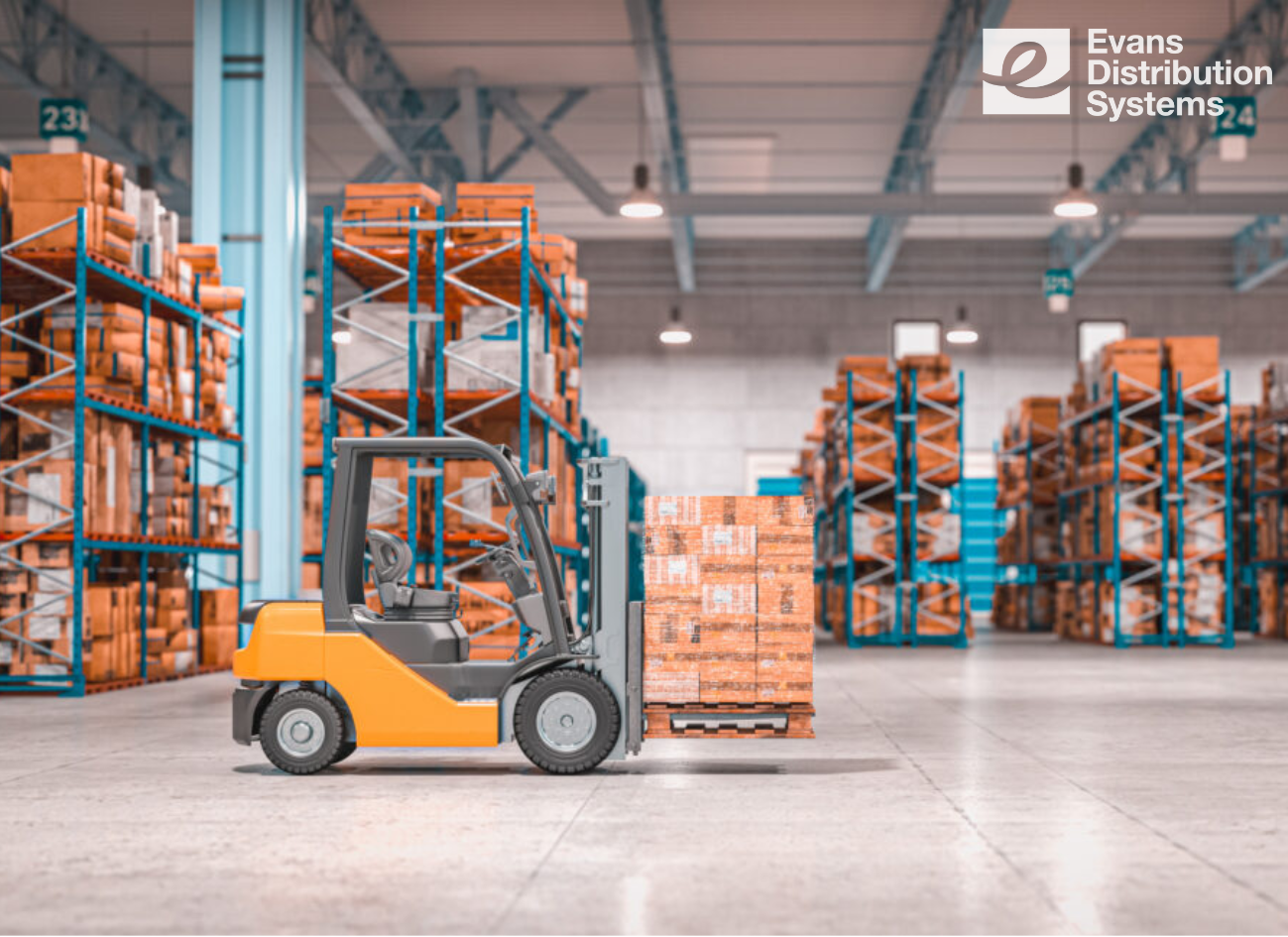
In the logistics world there are two terms that are often used interchangeably, but with very different meanings. These two terms are distribution centers and fulfillment centers. Both centers play critical roles in moving goods from manufacturers to end customers, but they are designed for distinct purposes, serve different operational goals, and support different business models. Understanding the difference between distribution and fulfillment centers plays a large role in companies looking to optimize inventory flow and reduce costs.
Distribution Centers
Distribution centers (DC) are warehouse facilities that are designed to store and move products in bulk quantities. The center serves as storage and regional transfer hub for companies engaging in large scale manufacturing, wholesale, or Big Box retail. Since these centers store bulk quantities, they manage pallet-level inventory and coordinate inbound and outbound shipments for business-to-business (B2B) accounts. A business may use a DC for redistribution to retail stores, wholesalers, or other smaller warehouses within their network with the goal of reducing lead times and transportation costs, since the center puts emphasis on speed, volume, and cost efficiency. DCs are ideal for retail consolidation, a process where multiple shipments from different suppliers or distribution points into a single, larger shipment headed in the same direction. For example, manufacturers build a network of DCs throughout the country to service a national grocery account that requires a high volume of goods to deliver on time to its network of 1000+ stores.
Fulfillment Centers
Fulfillment centers (FC) are specialized warehouses that engage in direct-to-consumer shipments. Also, known as a business-to-customer (B2C) model, FCs process individual orders by receiving inventory, storing, picking, packing, and shipping all within the same four walls. These centers prioritize speed, accuracy, and efficiency to process thousands of shipments from a variety of products and SKUs directly to customers. Since orders are received real-time by the FC, they typically require an order management software or integration capabilities to connect warehouse management software to a brand’s order processing system. The development of personalized online shopping experiences and high consumer expectations, make fulfillment centers an essential tool to process a high volume of same-day orders that e-commerce brands need to survive in this highly competitive industry.
Below are differences of distribution and fulfillment centers based on important aspects of the businesses.
| Distribution Centers | Fulfillment Centers | |
| Primary Purpose | Bulk storage and redistribution | Order processing and direct shipping |
| End Recipient | Business (retailers, wholesalers, manufacturers) | Individual, online consumers |
| Order Size | Large pallets or cases | Small, item-level orders |
| Location Strategy | Near manufacturing plants and regional transport hubs | Near metro areas and consumer clusters |
| Inventory Type | Long-term storage items | Fast-moving inventory, high SKU count |
| Technology Focus | Pallet handling, freight routing, basic warehouse management system | Item-level tracking, ecommerce integration, automation |
| Services Offered | Receiving, bulk, replenishment, just-in-time supply | Pick and pack, kitting, returns, and inventory management |
| Speed Priority | Efficiency in bulk transportation | Fast order processing & accurate shipping |
When deciding whether a distribution center or a fulfillment center is the right fit, businesses should take time to evaluate their specific operational needs. Key questions to consider include: Do we ship directly to end consumer or primarily to retail stores? Is speed or shipment volume the greater priority? Are we prepared to invest in technology-driven infrastructure? The answers to the questions can help clarify which model best aligns with your business goals, guiding you toward a DC or FC strategy that supports long-term growth.