
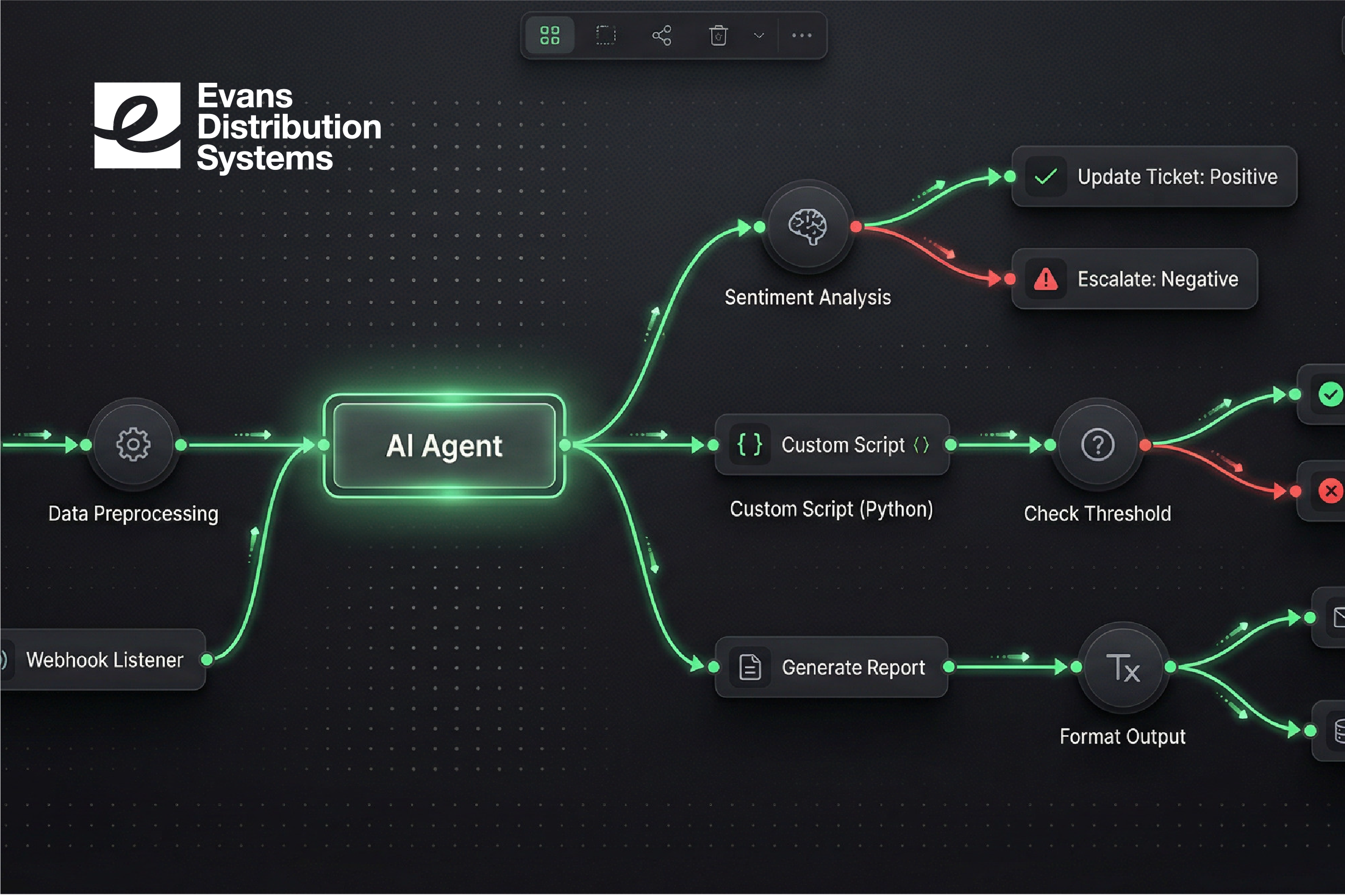
There’s no doubt that artificial intelligence (AI) and automation is changing the business landscape. More and more organizations are dedicating time and resources to identify the inefficient processes that stand to benefit from this evolving technology. One area worth exploring is the application of automated workflows to speed up or enhance routine business operations.
Workflows are not new. They automate or map out a process from start to finish by identifying each step and the components needed to produce the desired output. Workflows can vary from a visualization of a process, or in today’s world, a technology-based workflow producing an output without any human interaction. This emerging field of workflow software connects to various components – such as reports, files, websites, or external data – to create the output, guided by a series of logic or rules to ensure accuracy of the outcome.
Business Use Cases for Automation
Workflow automations work best when they replace manual, redundant, or recurring processes that don’t require human oversight or complex decision-making. Many software providers have workflow automation built within their systems that you may be utilizing already.
Common examples include:
- Auto approvals based on preset logic.
- Routing emails, invoices, or confirmations to the correct department or individuals.
- Sending real-time status updates to customers or employees.
- Syncing data between systems without manual entry.
- Distributing recurring reports to monitor activity and performance.
- Sending email marketing campaigns and notifications.
- Scanning systems or websites for errors or defined data points.
- Automating responses to address common requests or questions from online forms or websites.
- Alerting individuals via email about suspicious website activity or errors.
With the introduction of AI, workflows can be improved even farther to analyze or format the output to be more user-friendly or comprehensible. When applied correctly, this technology enhances functionality, leading to greater insights and value without human intervention. One example of this is using AI to identify prominent trends by cross-referencing multiple datasets like financials, surveys, or business analytics.
Unrealized Workflow Automation Efficiencies
Any manual task that can be automated creates underlying efficiencies within organizations. Here are a few key benefits to be gained.
- Speed – Regardless of the task, automated workflows increase the speed of completion because of its ongoing access to pre-defined components and rules. In contrast, manual processes cannot be completed if components are not accessible.
- Accuracy – As long as the workflow was designed correctly with successful machine learning that accounts for all anomalies’, automated processes are generally more accurate when compared to manual processes. Reduction of errors leads to less time spent backtracking and reworking and more time creating meaningful value in other areas.
- Visibility – Automated workflows follow pre-determined rules to run the same way, every time. This allows for more accessibility across different departments and organizational levels, creating deeper awareness of activities, information, and insights.
- Increased Productivity – Workflows free up time to focus on high value, complex, or strategic activities. They can also aid in tasks that require multiple information sources at high volumes at a much more productive rate.
- Organizational Cost Savings – Automations are generally more cost effective than manual labor. Organizations can produce more at a higher rate with lower headcounts.
- Improved Info Processing and Analyzation – Workflows can process high volume, high quantity, and high frequency information over extended periods of time.
- Idea Generation – Automation can lead to new ideas, process improvements, and refinement of current or future activities.
- Enhanced Planning, Organizing, & Implementation – Every small task, such as designing a project management plan, within a complex project that can easily be automated leads to increased bandwidth to accomplish higher quality goals and more effective deliverables.
Where to Start
Although workflow development is best as a continuous effort, there are a few exercises to get the ball rolling. At Evans Distribution Systems, we identified ways to explore this exciting new technology, including:
- Identifying projects within different areas of our organization that are repetitive, redundant, and easily recreated using AI technology or automated workflows.
- Research new tools to optimize our processes and enhance productivity.
- Discover new applications to leverage existing tools like Power BI, ChatGPT, or n8n.
- Explore integration opportunities within our current systems.
- Find existing templates to uncover insights within our roles, business, industry, and service capabilities.
As a final note, it’s important to apply AI and automated workflows where it makes the most sense. Organizations need a healthy balance between open-mindedness and avoiding unnecessary redundancy. Not every process lends itself to automation. Overspending time/resources on recreating wheels or developing workflows with little to no benefit should be recognized as counterproductive.
Focus on the easy wins, the most demanding tasks, or high value processes to see how it goes. Also, thorough testing and reviewing will ensure the workflow’s accuracy and signal when to move on. Pooling top-level buy-in and cross-departmental engagement into automation discussion will ensure there is always unrealized efficiencies right around the corner!