
Ding, ding, ding. Can you legally ship alcoholic beverages? Shipping wine, beer, and liquor can be sobering from a number of standpoints. Yes, it is legal to ship spirits but there are rules and regulations. Adding to the complexity, these regulations differ by carrier and by state. If you don’t have the experience or knowledge, the party might be over before it starts.
The repeal of Prohibition was cause for celebration in the 1930s but the lawlessness of alcohol consumption and distribution had also come to an end. Post-Prohibition laws placed strict regulations to keep alcohol taxed, traced, and age restricted. The Federal Alcohol Administration Act of 1935 also placed restrictions on manufacturers and wholesalers with permits, trade, labeling, fairness of marketing, and enforcement.
In an effort to overcome bootleggers, federal, state, and local governments built regulatory framework that connects manufacturers, wholesalers, retailers, and consumers operating as separate entities.

State regulation varies by state with most developing a dedicated agency to oversee enforcement. Some states have implemented regulation at the county or municipality level. In turn, this is where in-state and inter-state shipping complexity comes into play.
Major carriers like FedEx and UPS require shippers to have the same licenses as required to manufacture, sell, or distribute alcohol at federal and state levels. They do not allow consumers to ship alcohol. They also apply a surcharge and require age-verification with signature upon receipt of alcohol shipments. United States Postal Service (USPS) prohibits the shipment of alcohol beverages outright.
In-state vs Inter-state
In-state shipping is easier because shippers follow one set of regulations but could have county-by-county variances when it comes to product type (wine, beer, spirits), volume, licensing, permitting, and registration requirements.
Inter-state shipping is more challenging due to:
- High variability across states with evolving laws.
- High variability across type of alcohol (beer, wine, and spirits).
- Shippers must adhere to dual compliance of origin and destination states.
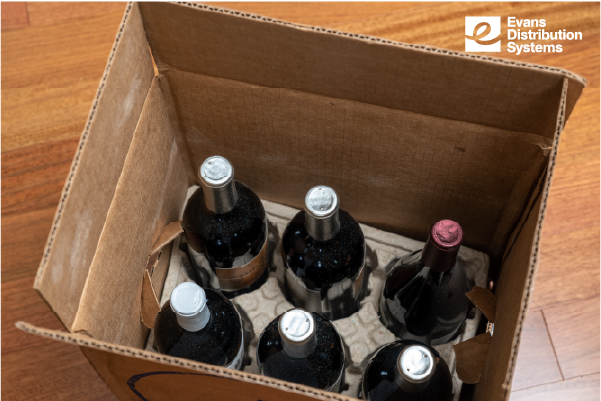
Universally, any alcohol shipment in the U.S. requires age-verification at point of purchase and delivery. All producers, wholesalers, retailers, and importers require federal and state licensing. All shippers must follow packaging requirements (secured for prevention of breakage) and labeling requirements. (clear alcohol declaration on exterior packaging, age verification requirement, and individual-level sender and recipient contact information). Carrier policies may also require pre-approval, licensing, and agreements.
Bottom of the Barrel
Whether direct-to-consumer or business-to-business, the “bottom of the barrel” to shipping alcohol is sobering. Undeclared or illegal shipments can result fines, confiscation, and licensing revocation/suspension. Your best bet is work with an expert like Evans Distribution, who has knowledge of federal and state regulations to ensure compliance. Evans Distribution also has liquor licensed warehouse facilities, strong partnerships with major shipping carriers, and the expertise to help customers operate a safe, secure, and legal alcohol distribution network from end-to-end.